RDW licence plate check: what you can look up for free, and what you cannot
· 7 min read
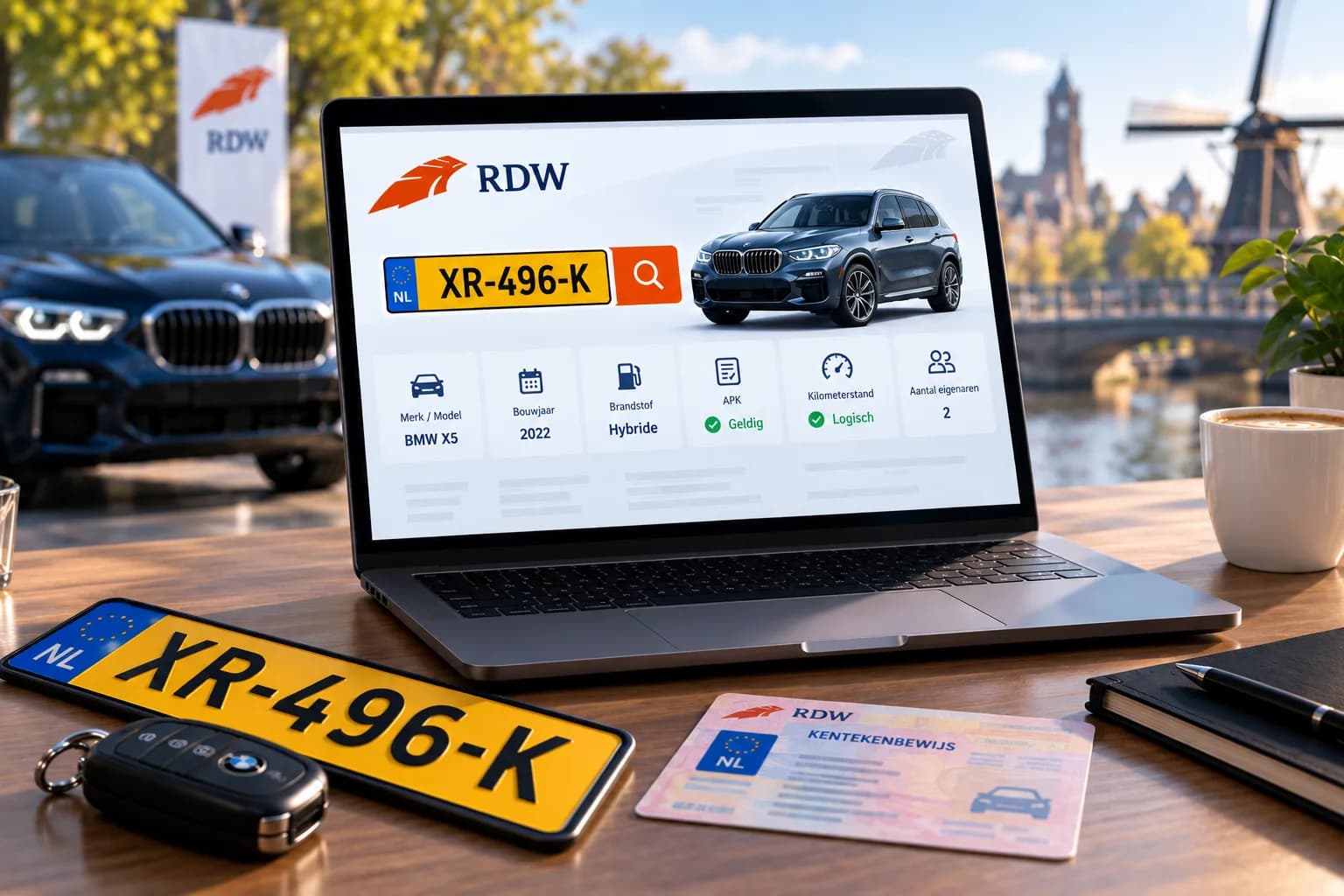
Anyone looking at a used car in the Netherlands sooner or later types the licence plate into Google. That is sensible: the Dutch vehicle register is remarkably open. The RDW, the Dutch vehicle authority (Dienst Wegverkeer), records for every vehicle what it is, when it was first registered, whether it passed its APK (the Dutch periodic roadworthiness test) and whether it is currently insured. A large part of that data is open to everyone. This guide describes the Dutch register; it applies to cars on Dutch plates.
But "public" is not the same as "everything". A RDW plate check tells you a lot about the car and nothing about the person behind it, and a few things you really want to know before buying are deliberately left out. This article walks through what you see, what you do not see, and how to fill the gaps without paying.
How do you run a RDW licence plate check?
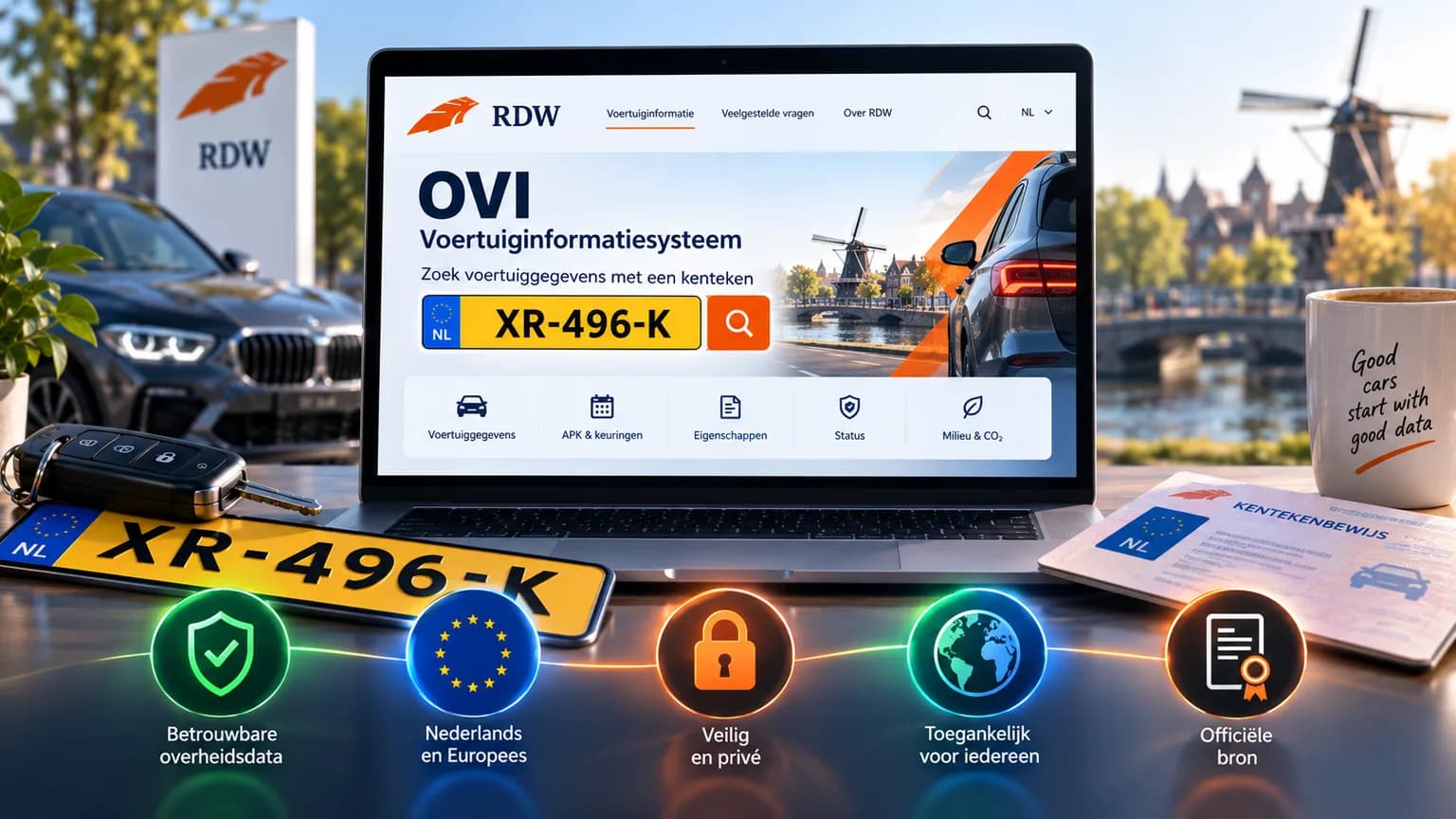
The RDW offers the check itself through its vehicle information system, OVI. You enter the plate, with or without the dashes, and see the public vehicle data straight away. No account is needed, no DigiD (the Dutch government login), and it costs nothing. How to read OVI in detail is covered in our separate article on OVI from the RDW.
The RDW also publishes the same data as open data. Every commercial plate check runs on it, including our free plate check. The difference is not in the source data, which is the same for everyone, but in what a service does with it and what it adds.
What a RDW plate check shows
The public vehicle data falls into a few groups. These are the fields that matter to a buyer:
- Identity of the car: make, trade name, vehicle type, colour, number of doors and seats, body style.
- Dates: date of first registration, date of first registration in the Netherlands and date of the most recent change of keeper. If the first two differ, the car was imported.
- Technical data: fuel, engine capacity, power, mass (empty and ready to drive), maximum towing weight, CO2 emissions and emission class.
- APK: the expiry date of the current roadworthiness test. An expired date means the car may not be driven until it has been tested again.
- WOK status: "wachten op keuren" (awaiting inspection) means that after damage or a technical modification the car must first be inspected by the RDW. As long as the status is set, it may not be driven.
- Odometer judgement (tellerstandoordeel): "logical" or "illogical", based on every mileage reading recorded at APK tests, servicing and changes of keeper.
- Insurance: whether a third-party liability policy (WAM) is currently registered against the plate.
- Recalls: whether the manufacturer has reported an open recall for this specific vehicle.
- List price: the new price as recorded at first registration, the basis for company-car tax and a reference point for value.
That is far more than most buyers expect. The combination of the registration dates, the APK date, the WOK status and the odometer judgement alone filters the biggest risks out of an advert before you drive a single kilometre.
What you do not see
Just as important is what the RDW deliberately does not publish. Anyone looking up a plate hoping for a name will be disappointed, and that is exactly the intention.
- The owner. The name, address and town of the registered keeper are personal data. Only the police, insurers, bailiffs and a handful of other parties with a legal basis may request them from the RDW. No website can legally show them.
- The mileage readings themselves. You see the judgement (logical or illogical), not the series of readings it is based on. That series is in the RDW vehicle report. Only the registered keeper can request it (free of charge), so ask the seller for it.
- Whether the car is stolen. Theft is reported to the police and recorded in the stolen-vehicle register, not in the licence plate register. A RDW plate check says nothing about it.
- Damage history. Damage repaired without an RDW inspection leaves no trace in the register. Only damage that led to a WOK status is visible, and then only while that status is open.
- Service history. Which garage did what and when is not held anywhere centrally. For that you need the service book and the invoices.
- The number of previous owners. The RDW shows the date of the most recent change of keeper, not how many came before it.
A plate check tells you what the car is and whether it may be driven. Whether you should buy it is a different question, and for that you need more than the register.
How to get more out of the same data
The raw register data is the same for everyone. What a good plate check adds is context: the same facts placed side by side and compared with other sources. A few examples of what can be derived from the RDW data, and what CarCheck does for you automatically:
- The full APK history instead of one date. The RDW also publishes every test and the defects found at each one as open data. A car that failed on its brakes three years running tells a different story from a car with a clean record, even though both may have a valid APK today.
- A theft check alongside it. Because theft is not in the plate register, CarCheck matches plate and VIN against the CarTrace register and, by VIN, StolenCars24.
- Road tax per month. Mass, fuel and province determine the Dutch road tax (motorrijtuigenbelasting). On a heavy diesel that is regularly the difference between a bargain and a mistake.
- A value estimate. List price, age, fuel and the odometer judgement together give a range for what the car is worth today, and so whether the asking price is right.
- Is the car for sale? Is this plate currently advertised anywhere, and for how much? Useful when you doubt whether the seller really is the seller.
Run the check now: RDW vehicle data, APK status, odometer judgement, WOK status, recalls, theft check, road tax and a value estimate. Free plate check, no account needed. While the launch offer runs (until 1 January 2027), a free account adds the full APK history and the PDF report.
Free plate checkFive things to watch for in the result
- First registration long before first registration in the Netherlands? Then the car was imported. Ask about its origin and the foreign service history, and pay extra attention to the odometer judgement: foreign readings are often not included.
- Odometer judgement "illogical"? That is not proof of fraud, but it is a reason to ask the seller for an explanation and for invoices. Without a convincing one: do not buy.
- WOK status active? The car may not be driven and must first go to an RDW inspection station. Price in the cost and the risk, or leave it.
- APK expired or about to expire? A seller who will not put the car through the test usually knows why.
- Most recent change of keeper only very recently? A car that has been in someone's name for weeks and is already for sale again is the pattern of traders selling as private individuals.
Free or paid: what is the difference?
Paid vehicle reports use the same RDW data as everyone else. What you pay extra for is usually commercial sources: claims files from the insurance industry, mileage readings from garage systems and information from abroad. On an expensive car or an import that can be worth it.
For most used cars the free route is enough: the register data, the APK history, a theft check and an honest value estimate. Start there. If the report is clean and the price is right, a test drive and a pre-purchase inspection are the next step. If the report is not clean, you have saved yourself a journey.
Last checked on 6 September 2026. Which fields the RDW makes public can change; the current list is on rdw.nl. CarTrace never shows owner details, not even for a fee.
Frequently asked questions
›Is a RDW licence plate check free?
Yes. The RDW makes the public vehicle data available free of charge through OVI and as open data. CarTrace's plate check, which runs on the same data, is also free and needs no account.
›Can I see who the owner is from the plate?
No. The keeper's name and address are personal data that the RDW only releases to parties with a legal basis, such as the police and insurers. No website may show them.
›Does the RDW show whether a car is stolen?
No. Theft is recorded in the stolen-vehicle register through a police report, not in the licence plate register. A good plate check therefore also runs the plate against the stolen-vehicle registers; CarCheck does that automatically.
›What does the odometer judgement mean?
The RDW compares every mileage reading recorded for the car, at APK tests, servicing and changes of keeper. If they rise consistently, the judgement is logical. If a lower reading was ever recorded after a higher one, the judgement is illogical and you should ask for an explanation.
›What is a WOK status?
WOK stands for wachten op keuren, awaiting inspection. The car has had damage or a modification that means the RDW must inspect it again first. As long as the status is set, the car may not be driven on public roads.
This article was drafted with the help of AI tools, including Leo, and checked and edited by the CarTrace team before publication.
Check any VIN or licence plate for free.
See more of CarTrace on Google
Pick CarTrace as a preferred source and our guides show up more often in your Top Stories and AI answers on Google.
Add CarTrace as a preferred source on Google