My Garage: everything about your car in one place, and why we built it
· 8 min read
Owning a car means keeping track of a lot of small things that each live somewhere else. The APK date is on a letter from the RDW. A recall arrives on paper, if the address on file is still right. The last oil change is on a sticker behind the windscreen or in a folder in the glovebox. What the car is worth is a guess, until the day you want to sell it.
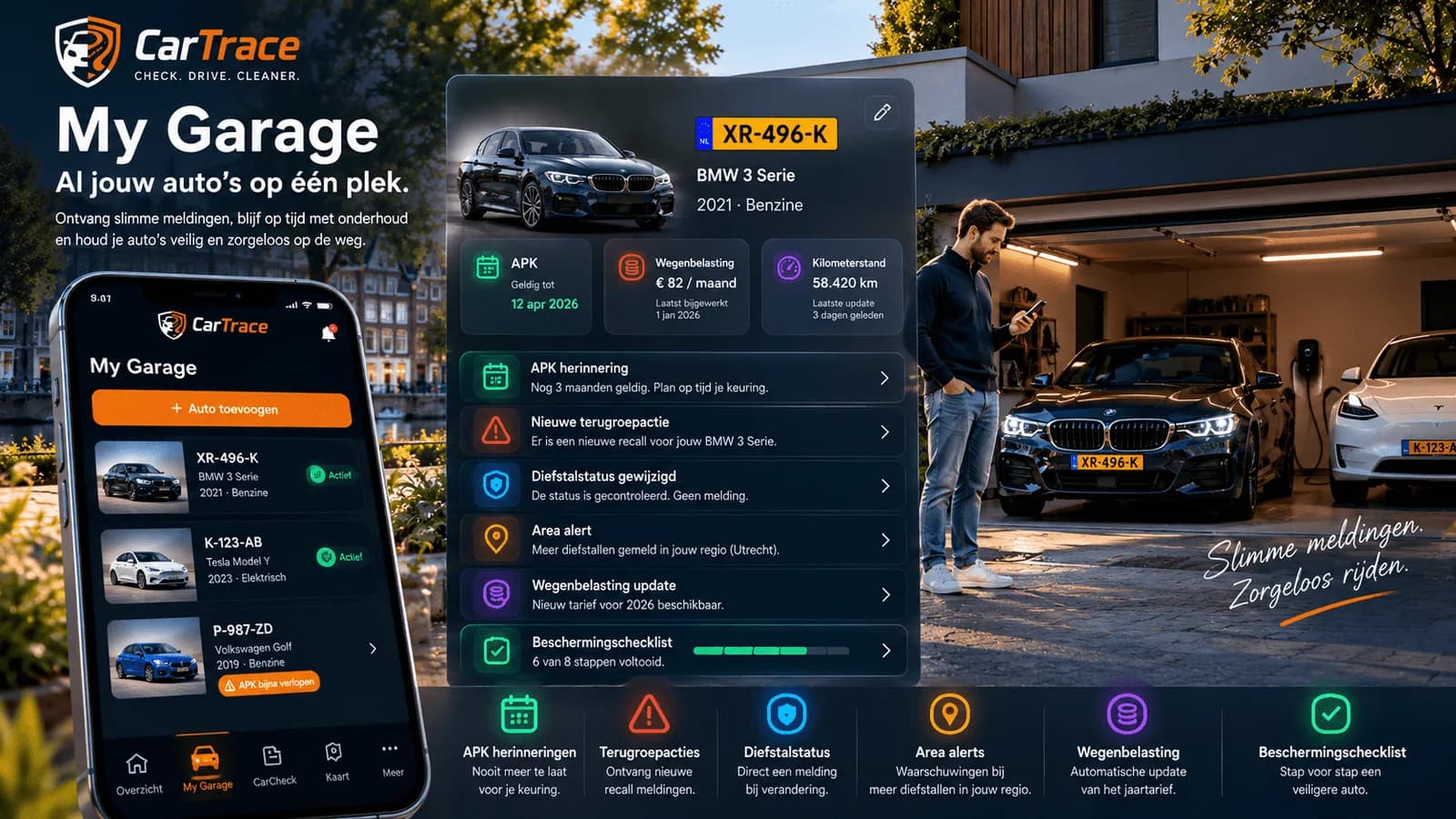
My Garage puts all of that on one screen per car. You add your car by its licence plate, and CarTrace keeps an eye on it: the APK, open recalls, the estimated value, the services you log, the kilometres you drive and the CO2 that comes with them. When something needs doing, you get an email. When nothing does, it stays quiet.
Why we built it
It started with a need every owner knows. An APK that has been expired for a week before anyone notices. A recall you hear about on a forum instead of in a letter. Nobody remembering when the brake pads were last done. None of that is hard information to find. It is just scattered, and nobody is watching it for you.
So we went looking for one place that did all of it. We found apps that send an APK reminder, websites that value a car, spreadsheets for a service history and marketplaces for selling. We did not find a single service that brings the official register data, your own maintenance log, the value, the CO2 and the sale together for your own car, and keeps working after you close the page. So we built it.
Every part of My Garage answers a question real owners asked us. That is also why some things are missing on purpose: we do not guess at what we cannot know, and we say so on the screen.
One screen per car, and your whole garage at a glance
Type a plate, check that the car we find in the register is yours, give it a name if you like ("the family car", "my daily") and save it. From then on the car has its own page, and your garage has an overview on top.
- Summary tiles for the whole garage: how many cars, their estimated total value, the next APK date and how many recalls are open.
- A car switcher that flags any car that needs attention, so you see the one with an expiring APK before you open it.
- Each car's page has its own address, so the back button walks between your cars and a link opens the right one.
Every feature, one by one
APK: always in view, never a surprise
The APK expiry date comes straight from the RDW register. My Garage shows how many days are left and turns the car into a warning when the date is close or past, because driving on an expired APK risks a fine. You choose how many days in advance you want an email, and you can set more than one reminder.
Recalls: watched for you
If the manufacturer opens a safety recall for your car, it shows on the car's page and you get an email. A recall repair is free at any franchised dealer, whatever the car's age, and plenty of owners never hear about theirs. This alone is a reason to add a car.
What your car is worth, kept up to date
My Garage estimates your car's current value from its registration data and typical depreciation, with a range and a comparison with other model years. It shows the price when new, and once a month it emails you if the estimate has moved. From there, one tap opens the full CarCheck report or a side-by-side comparison with another car.
Mileage and how you actually use the car
The public register does not publish odometer readings, so we ask you for yours. Enter the mileage now and then (an odometer only goes up, and we check that) and the garage works out your real driving pace: kilometres per month, how long you have owned the car, and any stretch when it stood still. That is useful on a lease with a kilometre limit, and a documented history is worth something when you sell.
A service log that plans the next job
Log a service with one tap: oil change, brake pads, tyres, air filter and plugs, wiper blades, coolant or other work. You can backdate it if it was done earlier. From those entries and your mileage, the garage plans when each job is next due.
- Kilometres and months both count. Whichever comes first sets the due date, so a car that is hardly driven still gets its oil changed.
- Your pace, not an average. "In about 4,000 km" is measured from your own readings.
- Nothing is invented. A service you have never logged gets no due date; the garage asks you when it was last done instead.
- A maintenance email arrives when something you logged falls due.
The intervals are typical for the Dutch market, not your manufacturer's schedule. Your handbook has the exact figures for your car.
Your CO2, month by month
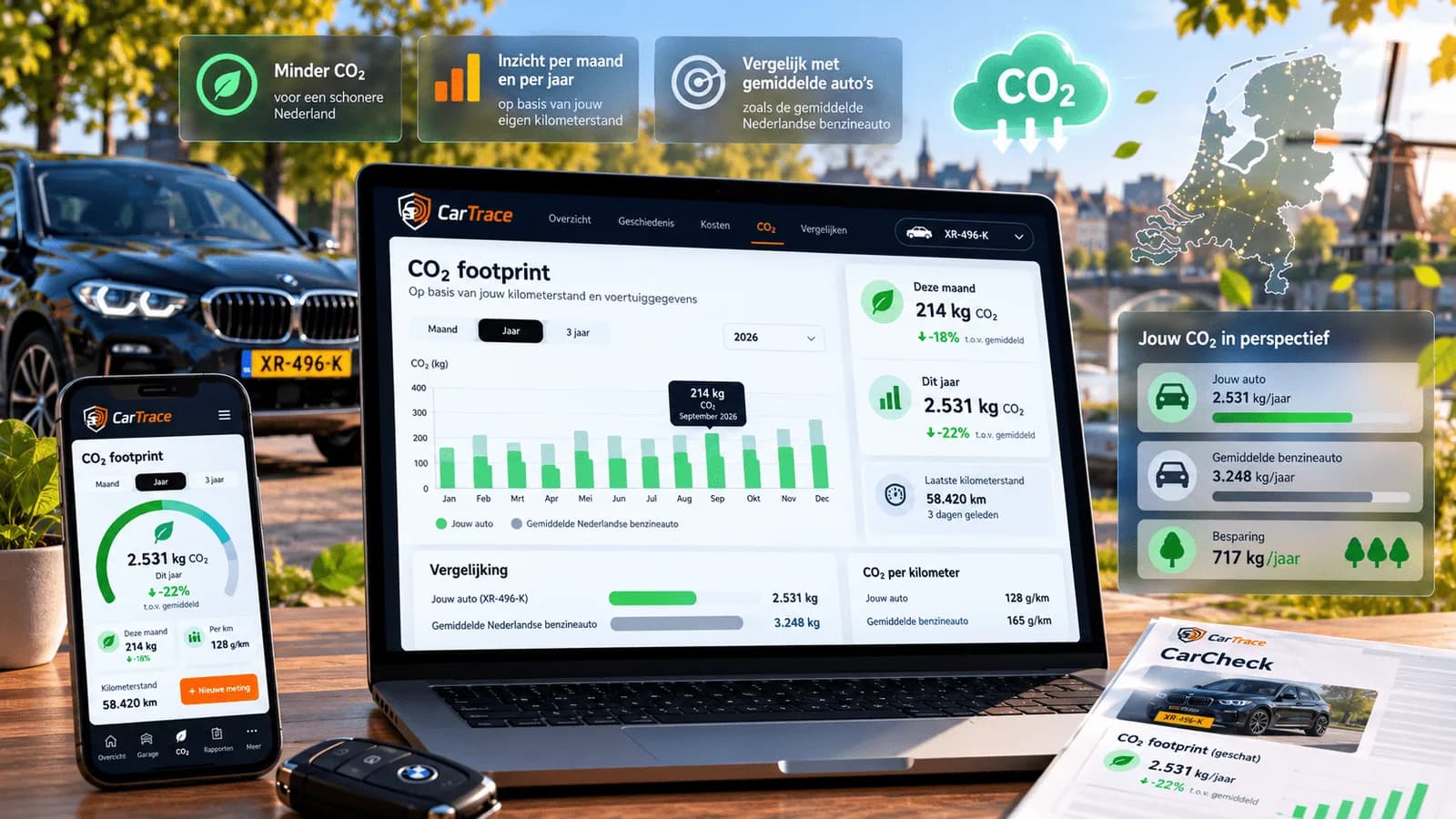
From your odometer readings and the car's registration, My Garage calculates what the car actually emits on the road, including producing the fuel or the electricity, and shows it per month and per year next to an average Dutch petrol car. For an electric car you choose the power source. How that calculation works is explained in our CO2 guide.
Good to know: theft risk and insurance
Each car shows its theft risk, based on CarTrace's own theft statistics: how often this make is stolen and where it ranks among all makes. Next to it is a plain-language note on whether comprehensive cover is worth considering for that profile, and how many cars of the same model are on Dutch roads. It is general information, not advice from or about any insurer.
Leo knows this car
Leo, our AI assistant, sits inside the garage with the car's facts already loaded. The first line it shows is calculated from your data, not written by the AI: "your APK runs out in 21 days" or "brake pads are next, in about 3,000 km". Then you can ask what you like. What should I do first with a €400 budget? What does an APK usually cost? Is now a good moment to sell? You can also just say "my Golf": Leo matches the car by its name, make or model, so you never have to type the plate.
Selling kit: an advert in one click
When it is time to sell, the garage writes a ready-to-paste advert and a full spec sheet from the official register, plus anything you add yourself, such as new tyres or a full service history. It suggests an asking price from our estimate. It never makes up condition or history: where only you know the answer, like the mileage or why you are selling, it leaves a blank for you to fill in.
Email only about your cars
You decide what lands in your inbox, per type: APK and recall alerts, value updates, maintenance checks, and (only if you want it) occasional product news. There is no spam, and the car emails are never marketing.
From the plate check to your garage
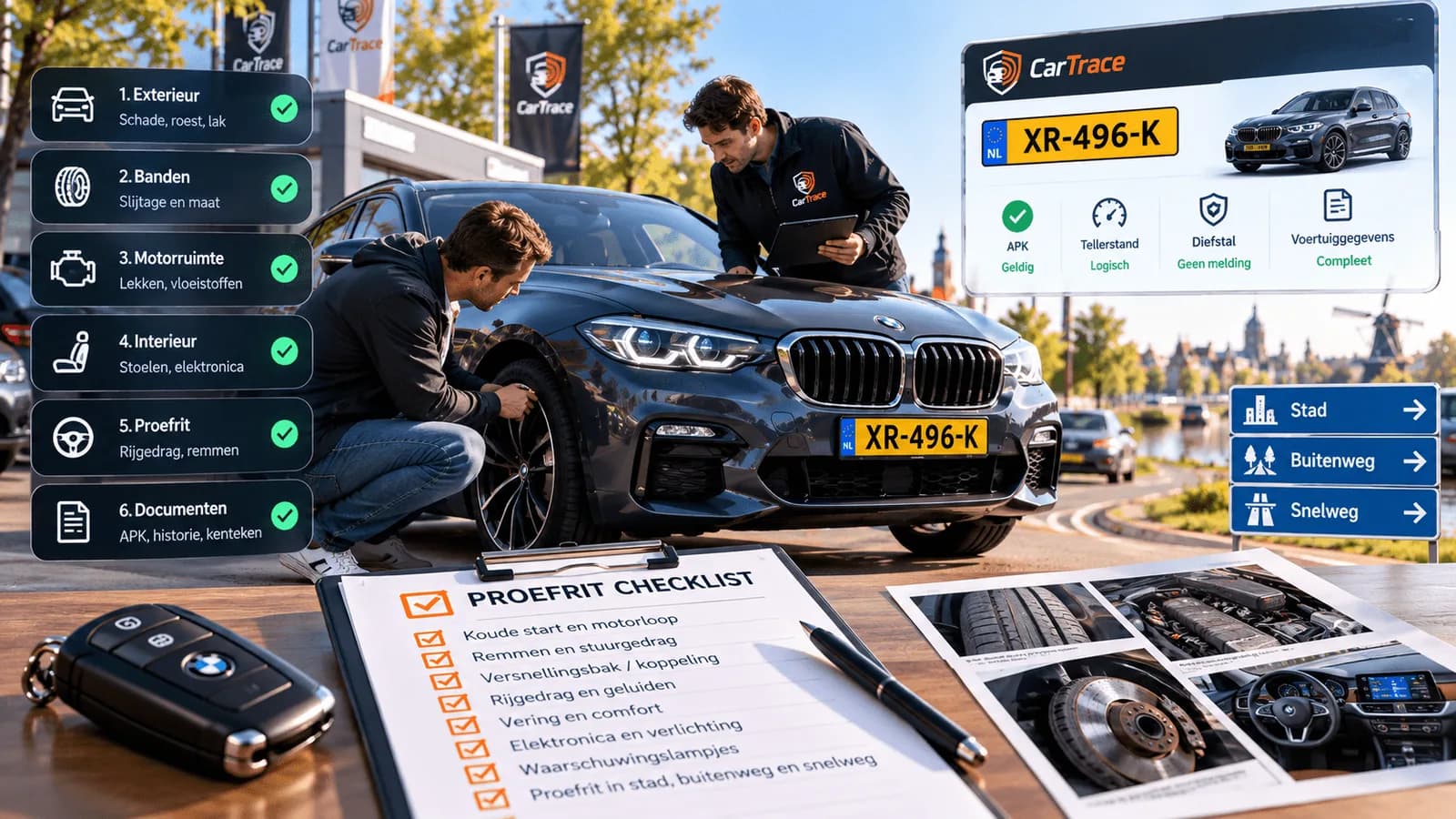
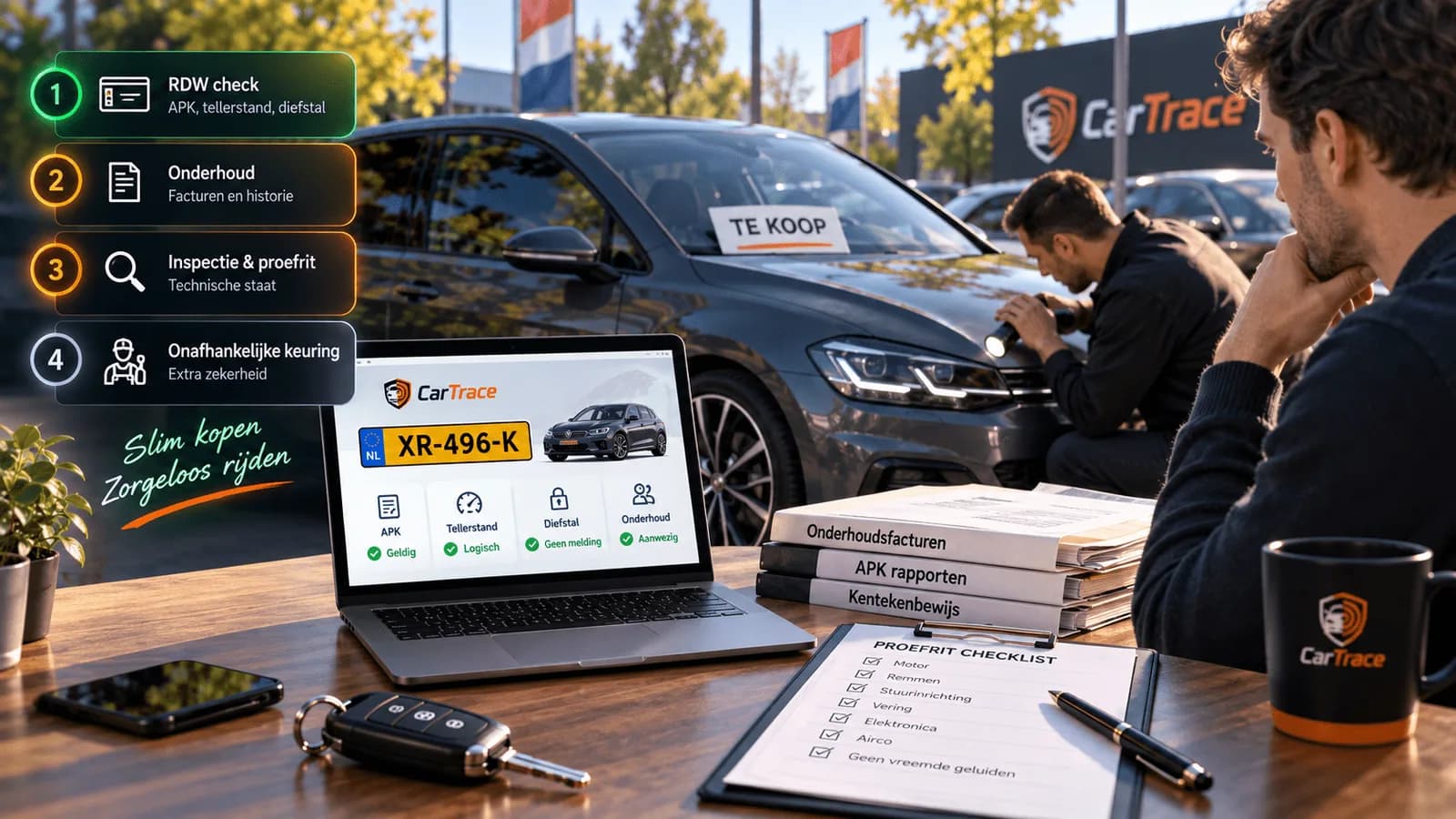
Most cars reach a garage the same way: someone checks the plate, takes a test drive and buys it. CarCheck covers the first part, with the APK status, an odometer verdict, the theft status and the register data. My Garage picks up where that stops. The plate you checked before buying is the plate you add afterwards, and from then on CarTrace keeps watching for you.
Around the garage sits the rest of CarTrace. On the theft map you can sign up for free alerts when cars are reported stolen in your area, and the protection guide walks you through making your own car a harder target.
Why it is useful, in practice
- No missed APK. An email weeks ahead, when the garages still have room, instead of a fine at a roadside check.
- Recalls fixed for free. A safety repair you would otherwise not have known about.
- Maintenance on time, not too early. Planned on how you drive, so you neither skip a job nor pay for one that was not due.
- Know what the car is worth. Useful for insurance, for a trade-in, and for deciding when to sell.
- A history you can show. Logged services and mileage make a car easier to sell and to trust.
- One place for the household. Several cars, one overview, one set of emails.
What makes it one of a kind
Plenty of services do one of these things well. What sets My Garage apart is that it does all of them together, for your own car, and keeps doing it:
- Official data and your own data in one place. The register tells us the APK, recalls and specifications; you tell us the mileage and services. Neither is enough on its own.
- It works while you are not looking. Reminders, recall alerts, value updates and maintenance checks run every day, whether or not you open the page.
- It is honest about what it does not know. No invented due dates, no invented condition in an advert, and a clear note wherever a number is an estimate.
- An assistant that already knows the car. Leo answers about your car, not about cars in general.
- From buying to selling. The same plate goes from a pre-purchase check, through years of ownership, to a ready-made advert.
How to get started
- Create a free CarTrace account, or sign in.
- Open My Garage and type your licence plate.
- Check that it is your car and save it.
- Enter the current mileage and log the last service you remember.
- Choose which emails you want. That is it: the garage takes it from there.
Add your car by its licence plate and see its APK, recalls, value and CO2 on one screen. Free for one car.
Open My GarageFrequently asked questions
›What is CarTrace My Garage?
My Garage is the part of your CarTrace account where you save your own cars by licence plate. It tracks the APK date, open recalls, the estimated value, your mileage, the services you log and the CO2 the car emits, and emails you when something needs doing.
›Is My Garage free?
Yes, for one car. You need a free CarTrace account. Paid plans hold more cars, which is useful for a household with more than one.
›Where does the data come from?
The APK date, recalls and specifications come from the official Dutch vehicle register (RDW). The value is our own estimate from registration data and typical depreciation. Mileage and services come from what you log yourself, because the register does not publish odometer readings.
›Does My Garage follow my manufacturer's service schedule?
No. It uses intervals that are typical for the Dutch market, in kilometres and months, whichever comes first. Your handbook has the exact schedule for your car, and the garage only plans services you have logged at least once.
›Can I add more than one car?
Yes. The garage shows all your cars in one overview, with their total estimated value, the next APK date and the number of open recalls, and flags any car that needs attention. How many cars you can add depends on your plan.
Check any VIN or licence plate for free.